






PAYMENT PROCESSING OPTIONS
Choose a pricing approach built around your business.
Payment processing is not one-size-fits-all. PayLow Pro helps you compare Dual Pricing, Cash Discount, and Traditional Pricing so you can balance customer experience, operating costs, and the way your business accepts payments.
PAYMENTS THAT PAY YOU BACK
Keep more control over every transaction.
The right pricing structure depends on how your customers pay, how you display prices, your average transaction size, and how you want processing costs handled. PayLow Pro helps you understand the differences and configure an approach that supports your workflow.
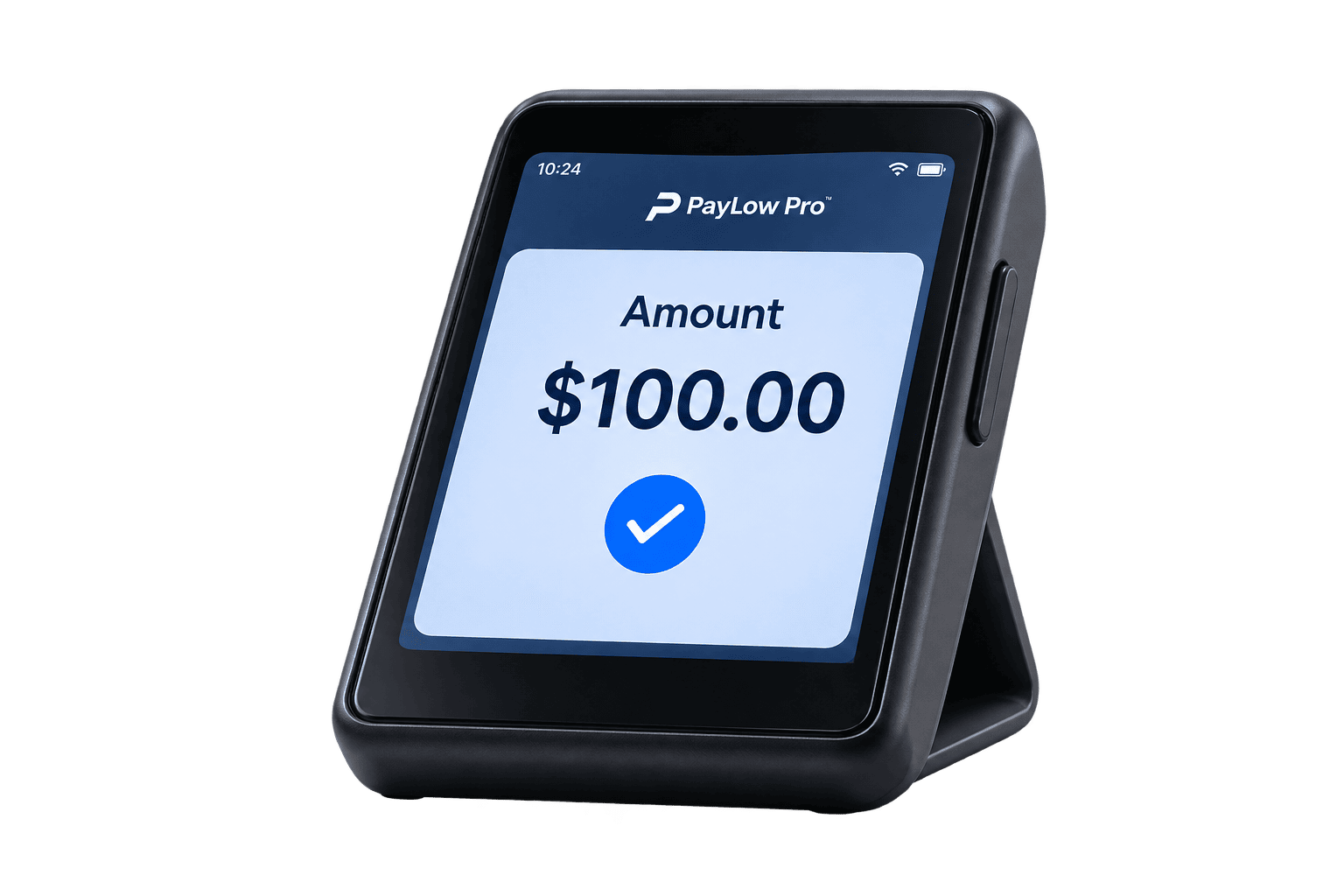
Traditional Processing
Low-rate standard processing.
Charge customers the same posted price regardless of payment method while your business pays processing fees under an agreed rate structure.
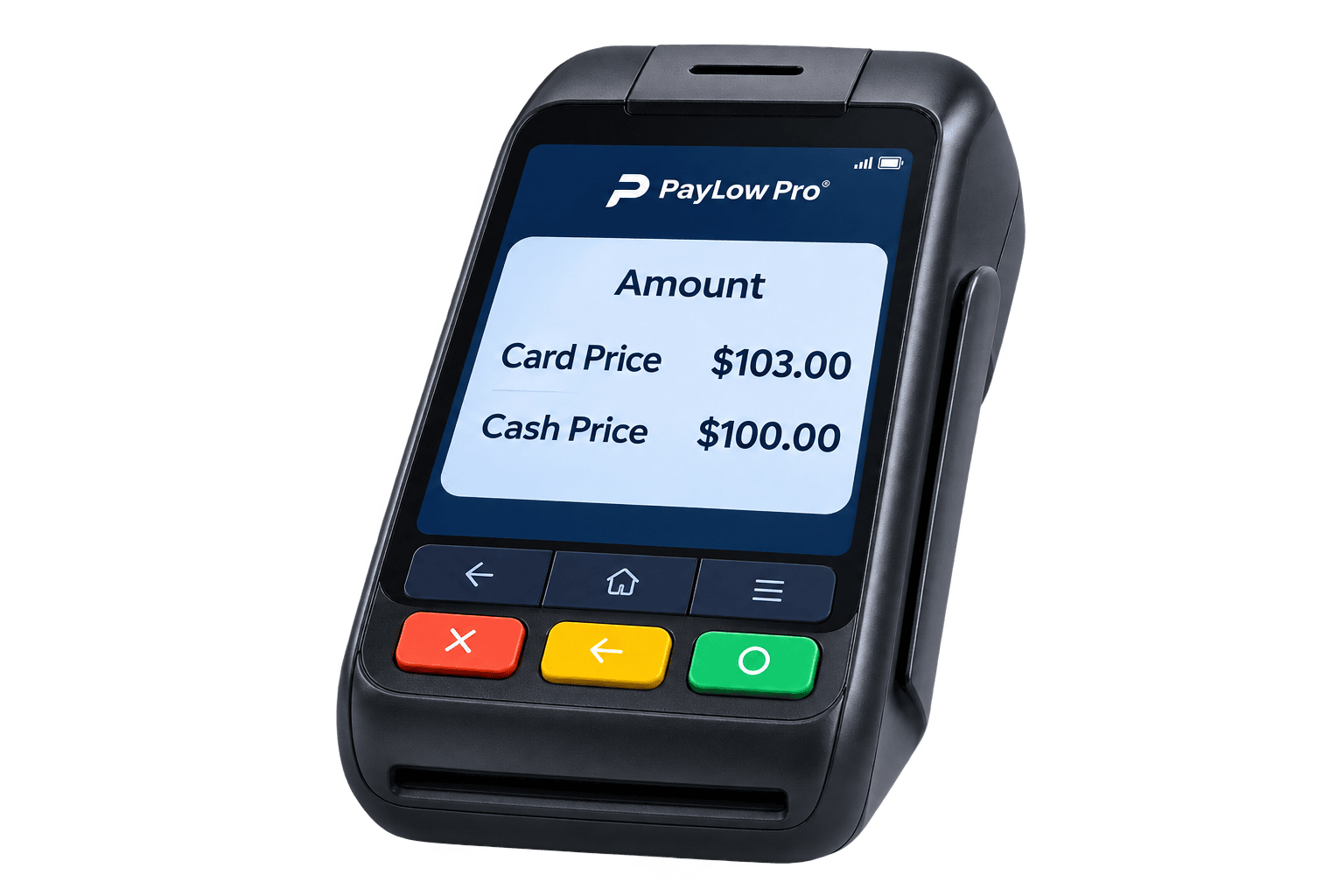
Dual Pricing
Display two prices and let customers choose.
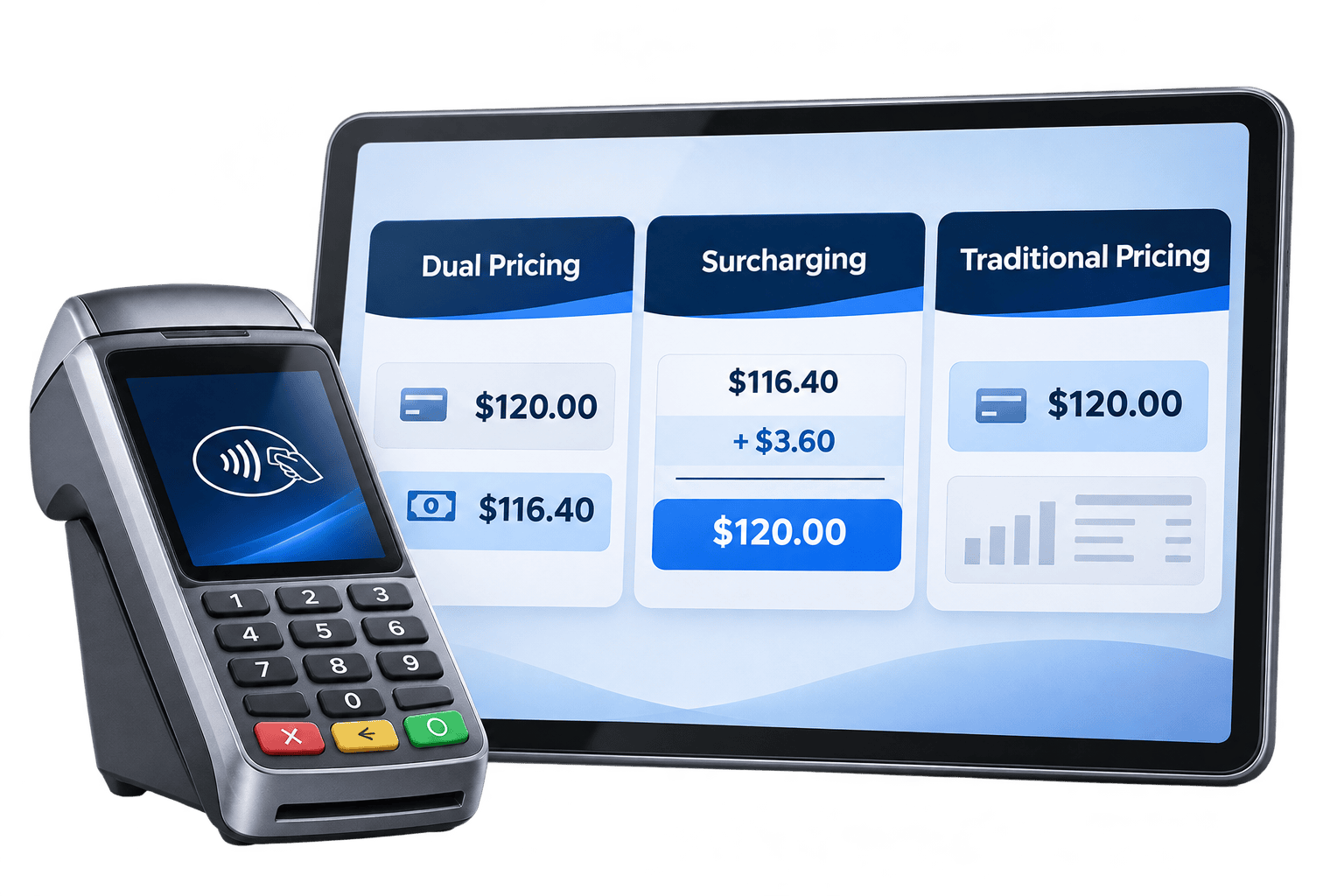
Display a cash price and a card price. Customers choose how to pay, and the card price reflects the cost of card acceptance.
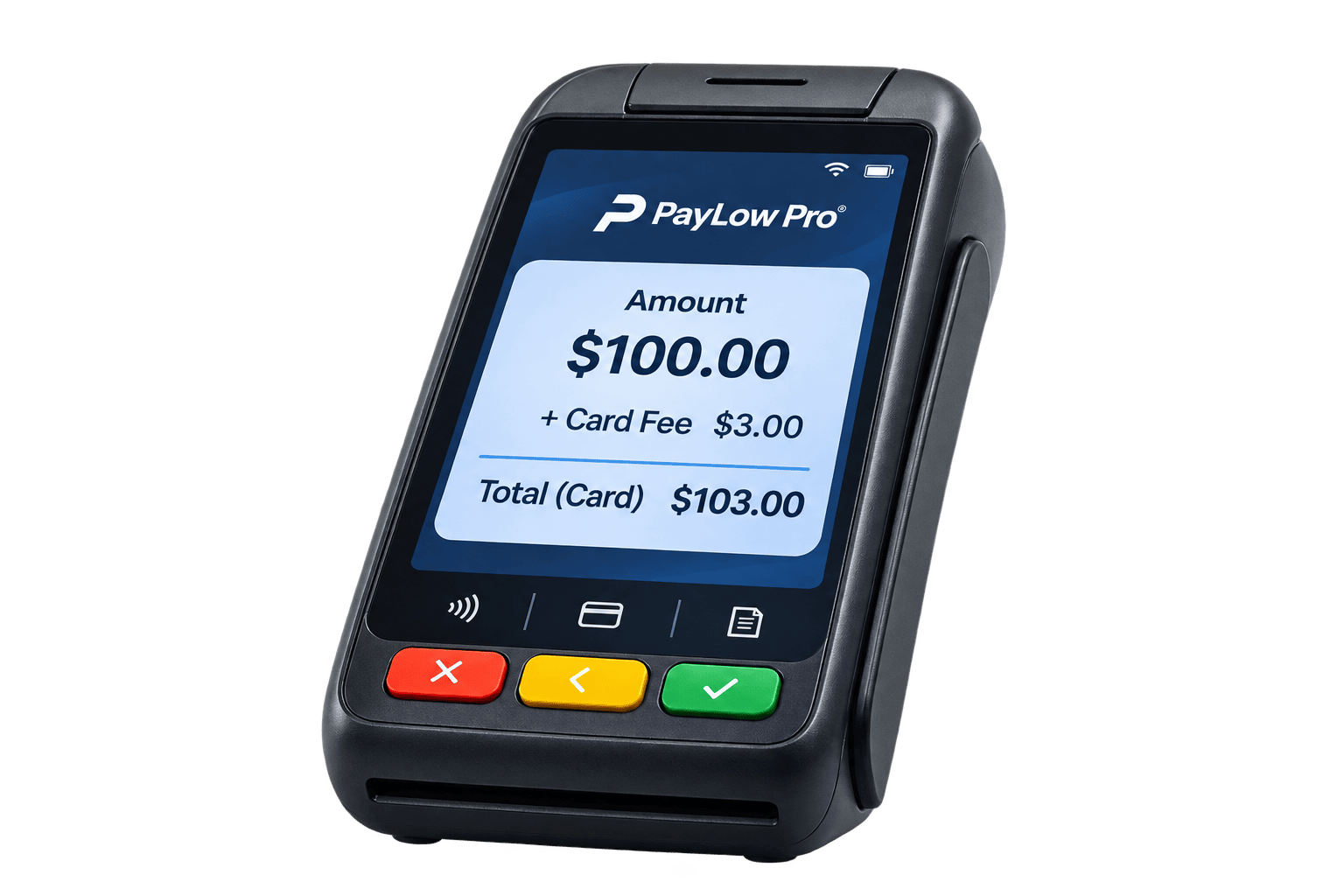
Surcharge
Offset credit-card costs with a disclosed fee.
A Surcharge program keeps the business’s standard price in place and adds a disclosed fee when an eligible credit card is used.
Pricing Options Comparison
| Comparison | Dual Pricing | Surcharging | Traditional Pricing |
|---|---|---|---|
| How prices appear | Two prices are shown at checkout—for example, a card price and a discounted cash price. | A card fee is added to eligible credit card transactions and shown at checkout. | One consistent, posted price applies to all accepted payment types. |
| Who absorbs card costs | The customer chooses a card price that includes applicable card costs or a discounted cash price. | The customer pays a clearly disclosed fee on eligible credit card transactions. | Your business absorbs the payment-processing costs. |
| Customer choice | Yes—customers can choose between the displayed card price and discounted cash price. | No—the fee applies when an eligible credit card is used. | No—the same posted price applies regardless of the accepted payment type. |
| Often fits | Businesses that want to offset credit card costs while giving clients the option to save more by paying in cash. | Businesses that want to offset eligible credit card costs while keeping one posted price. | Businesses that prefer one consistent posted price for accepted payment types. |
| Primary advantage | Flexibility and cost control with clear, customer-friendly choices. | Helps offset eligible credit card costs while preserving posted prices. | Simplicity, consistency, and a familiar checkout experience. |
How PayLow Pro Helps
The right setup for your business
Modern, reliable technology
Powerful, easy-to-use payment terminals and tools for in-person and card-present payments.
Clear and compliant
Transparent setup and guidance so your pricing is straightforward and dependable.
Ongoing support
A dedicated team that's here to answer questions and keep your payments running smoothly.

Find the pricing structure that fits.
Talk with a PayLow Pro payment specialist about your current processing costs, customer payment behavior, and business goals.
We will help you compare the available approaches and identify a practical next step.
Frequently asked questions.
The answer depends on transaction volume, card mix, average ticket, and program configuration. Dual Pricing can provide strong cost recovery, while Surcharging can offset eligible credit card costs. Traditional Pricing keeps the customer price uniform while the business pays processing costs.
Not every approach fits every business or jurisdiction. Surcharging has especially strict eligibility, registration, disclosure, fee-limit, and refund requirements. Program design, equipment, card-brand rules, and applicable laws should be reviewed before implementation.
Compatibility depends on the specific platform, device, and workflow. PayLow Pro can review your environment and recommend supported integration and equipment options.
In many cases, yes. PayLow Pro can help reassess your transaction patterns and goals, then explain the operational and equipment changes involved.


